Mary Lou Andre

Fashion Q&A: Pilling Fabrics

Fashion Q & A: Pilling Fabrics Q: I recently updated my work wardrobe for winter with several knit pieces in bright colors from Banana Republic. They label says Italian merino (my all-time favorite sweater fabric!) but upon more carefully reading the label, I see that the merino wool is blended with rayon and polyester as well. I have noticed that after a few wearings, the fabric is starting to pill under the arms and where my bag rubs on it. Since I have had not very much success with sweater stones and pill remover devices, I’m wondering what your advice is on pilling fabrics? Many thanks in advance for your reply. A: There definitely has been a drop in quality of fabric over the past few years so you are wise to read the fabric care label carefully. For instance, there is a reason why 100% cashmere is usually more expensive. It has not been mixed with less expensive fibers and therefore holds up better when properly cared for. Less expensive wools (ie merino) are not as luxurious. When you add synthetic blends (like polyester), they tend to be softer and actually hold their color better, attracting many consumers to them. They often are less durable with synthetic additions to them. I think this is what you are experiencing with the Banana brand. No matter where they get their wool sweaters, we tell our clients to dry clean these pieces for at least the first year, even if the tag says hand and machine washing is okay. After that, if they want to hand wash an item, we suggest they turn the items inside out, place them in a zippered lingerie bag, wash on the gentle cycle and then lay flat to dry. Be sure to properly understand your clothing labels. “Dry Clean Only” means just that, but “Dry Clean” often means you can hand wash too. For the record, I only dry clean my sweaters. If I have questions about any garment, I consult with my good friends at Anton’s Cleaners before I do anything! As a professional, I suggest you establish a two-way dialog with your cleaners too!

Fashion Q&A: Pilling Fabrics Read More »

Fashion Q&A: Nail Polish

Fashion Q & A: Nail Polish for the Office Q: What color nail polish is appropriate for the office? I tend to prefer dark shades, like a classic red. However, I recently found a very dark color that I love, but I wonder if it’s ok? It’s from OPI and it’s called Lincoln Park After Dark (it’s referred to as a midnight purple.) I would even say it comes out little darker (closer to black) than how it seems in this picture. Is this ok? A: Overly dark nail polish shades are a distraction in most work places. The OPI color Lincoln Park After Dark falls into this category. Save this color for vacation, special events and date nights! We advise our corporate clients to choose pale neutral shades that are more in keeping with a professional look. French manicures are also work well in a corporate environment. If you like darker colors look for a soft red or soft brown. Your nail color should be a part of your overall polished look and not the thing that stands out in a flashy manner.

Fashion Q&A: Nail Polish Read More »

Fashion Q&A: Casual Pants

Fashion Q & A: Casual Pants for Work Q: In the warmer months, my company’s dress code allows for more casual attire. Even though jeans and capris are allowed from Memorial Day to Labor Day, I think they’re too casual and don’t plan to wear them. Do you have any insights into what makes certain casual pant choices too casual for the office? A: Many of our private clients who work outside the home have a healthy selection of casual pants in their wardrobes. Many of them report getting ready for work and staring at them, wondering if they can (or should!) wear them on the job. The following guide will help you decide whether to slip on casual pants or whether to leave them at home when dressing for work. Remember, common sense prevails. Check with your HR department if you need some more clarification about how any of these fabrics and styles fit into your particular business culture. Jeans: Jeans have come a long way in the century-and-a-half since Levi Strauss secured the pockets of his “waist overalls” and sold them from his San Francisco dry goods store. These days, jeans come in a plethora of cuts, colors and styles, and are the garment of choice for a variety of casual situations. In many industries, jeans, in any color, remain inappropriate for most business situations. The problem is that while some folks look great in them and they understand the importance of making sure they are presented professionally, others will always look sloppy and, well, too casual in them. Also, you have no control over how customers and colleagues view jeans. If your office does allow jeans, be smart about how you present yourself in them. Khakis: With the casualization of the American workforce over the past decade, khaki pants are not just worn in the warmer months anymore. In fact, entire industries claim them as their unofficial “uniform” all year round. If you choose to wear yours for work on business casual days, be sure they are in excellent condition. If you look like you are ready to rake your lawn in them, they are probably too casual for even the most relaxed business environment. Khakis made out of 100% cotton generally do not wear as well as those made of lightweight wool, or a combination of a synthetic fabric (like polyester) with the cotton. If you do choose to wear 100% cotton styles, consider having them dry cleaned if you aren’t disciplined enough to keep them wrinkle-free on your own. Dry cleaning can also give them a longer shelf life. Capris: Capri pants (generally defined as ending mid-calf) are considered a very casual summer dress pant choice and are not the best pant length to wear in most business environments because they tend to scream “take me to the beach, please!” Having said that, a cropped pant (defined as ending just above the ankle) can be okay for work if they are presented professionally. An open toe, business-appropriate shoe can give cropped pants a more professional look than overly casual or overly dressy sandals, especially if they are paired with a well-coordinated business-appropriate top or jacket.

Fashion Q&A: Casual Pants Read More »

Fashion Q&A: Wardrobe Basics

Fashion Q & A: Wardrobe Basics Q: I have recently lost weight and trimmed down two sizes. I need to build a new wardrobe. What are the basics pieces to start with? Can I do this on a reasonable budget? Editor’s Note: This month’s question is being answered by consultant Karen Costa. Karen is available for virtual consulting — a great way to get prompt, specific fashion advice no matter where you live. Follow this link to learn more about how our popular virtual consulting program works. A: Congratulations on your weight loss!!! It must feel wonderful to be down two sizes. The important thing in this economy is to make clothing and accessory purchases that give you maximum flexibility in you wardrobe. The following are some of the basic pieces that I suggest you shop for first. Great pair of black pants (A real wardrobe builder.) Buy two and have one hemmed to flats and one hemmed to heels.     Trouser or boot leg jeans in a dark rinse. Buy two and hem one for flats and one for heels.     White shirt updated with 3/4 sleeves     Twin sweater set in cashmere or a good prima cotton blend. Look for colors like purple, coral and lemongrass.     Sheath dress with short cardigan jacket or safari inspired shirtdress.     Short belted trench coat     Black patent ballet flats     Black heel     Black tote All of the above items can be found in stores and online sites this spring. I especially love finding classic pieces at Talbots, Ann Taylor, Nordstroms and Macys. Check out their websites for ideas and watch for sales! Use accessories to add a pop of color and an element of fun to your basic wardrobe. Look at Target, H&M, JCPenney and Kohl’s for the latest trends at affordable prices. Happy shopping!

Fashion Q&A: Wardrobe Basics Read More »

Fashion Q&A: Sockless in the Summer

Fashion Q & A: Sockless in the Summer? Q: I don’t like to always wear socks with my loafers in the summer. As a senior executive, I know socks need to stay on during business hours. What about the weekends? Can you give me some guidance? A: Here’s the skinny on socks vs. non-socks for men in warm weather from our professional prospective: You are correct about always wearing socks on business days. In our opinion, it is never appropriate to go sockless at work. On weekends (and for off-site work and social functions during the week), you can forgo them with a little prep. First, be sure your feet are super clean and dry. Any moisture can cause bacteria, which causes odors — one of the reasons some men will never forgo socks with any type of loafer. If you do forgo socks with your loafers, be sure to dry your loafers between wearings. To absorb moisture, cedar trees work well as do dryer sheets stuffed in the toes. When you are wearing loafers with shorts, it is best not to wear socks. Sperry Top-Siders (aka boat shoes) are meant to be worn sockless with shorts and look nice with traditional shorts in the summer. For guys who want to avoid the whole socks vs. no socks question with their loafers — we often recommend this style of shoe to be worn with shorts in warm weather if it fits with the client’s personal style. Extra bonus — “top-siders” (also called “dock siders”) are currently very much in style so you should have no problem finding a pair if this idea appeals to you. They are more casual than a traditional loafer and, therefore, naturally complement the more casual look of shorts. Obviously, if you are going to an event that is on the dressy side, any loafer or top-sider you choose to wear with shorts should be in excellent shape. A lot of our male clients ask us what is the best sock or non-sock option with khaki pants and a polo shirt. I personally like to see socks with this type of more conservative pant outfit — I think it is more polished. It’s a preppy look to go without socks when wearing pants and loafers so you risk the possibility that others will perceive you as slightly collegiate (and sometimes, as I hear from time to time when my corporate clients are prepping me to train their sales force, even elitist.) Take these sentiments with a grain of salt and do what is best for you! It is always my goal to present relevant and thorough insights about any topic we are asked about. Finally, the easiest sock color to wear with a light pair of khaki-colored pants and a brown loafer is brown. You want to coordinate socks with your shoes first. Loafers in the brown family (cordovan included) look best with traditional khakis and are more casual than a black pair of loafers. Black loafers coordinate best with black socks and lightweight black pants in the summer months. In my opinion, they are too harsh with khaki-colored pants made of any fabric (aka cotton or lightweight wool.) Good luck! I hope these tips guide you in making good style choices this summer.

Fashion Q&A: Sockless in the Summer Read More »

Fashion Q&A: Too Much Black and White?

Fashion Q & A: Too Much Black and White? Q: Is there such a thing as having too much black and white in a wardrobe and not enough color? Color confuses me so I most often wear black and white, but I don’t want to look dated or boring! A: We have many very stylish clients who build their entire wardrobes with black and white separates. These two neutrals look sharp together, travel well, are easy to find at a variety of price points and make getting dressed a snap. The key to keeping this type of wardrobe fresh and up to date is to add silhouettes and shapes each season that are most in style. For instance, when pants got skinny, our clients in this category added several fresh pairs of “skinny” pants in both black and white. When tees got longer, they followed suit. Also, you don’t want too much black or too much white so combining the two colors (actually neutrals!) does take some thought. A black belt on a white dress, a white shawl over a black dress is the way to add some signature style. All the fashion magazines are actually applauding black and white this spring as a sophisticated fashion choice. We are seeing lots of black and white stripes in the marketplace. Adding a few pieces that sport this pattern might be all you need to do to update for the season sensibly and with style. Finally, if you do want to add a pop of color, red and yellow look great with black and white – even if you add just a scarf or pair of shoes in one of these hues!  

Fashion Q&A: Too Much Black and White? Read More »

Dressing Up in a Down Economy

Dressing Up in a Down Economy By Mary Lou Andre President and Founder Organization By Design, Inc. Professional image is a powerful yet often overlooked tool for getting results for yourself and your company. While it may seem counterintuitive, spending money on the way you look and present yourself in tough economic times is actually a sound investment. The confidence you gain helps you become more secure, calm, confident and prepared for things outside of your control. It also inspires trust and confidence. Hiring someone to coach you through the process of developing an authentic executive presence that supports your leadership style is not frivolous. As in most things, a seasoned professional cuts through the clutter, uses years of experience to make the process go quickly and has an intuitive sense of what will be right for you. A coach specifically trained in professional image consulting can make necessary edits to your closet and then help you select the correct colors, styles, brands and cuts of clothes and accessories to help you effectively communicate, connect and build relationships with colleagues, customers and business partners. Here are some of the principals that an experienced professional image coach brings to the table when guiding executives at all levels to package themselves for success: Appropriateness, Boundaries and Respect. Whether shopping in the store or shopping in your closet, adopt these three words as your personal litmus test. Ask yourself, is this outfit appropriate for my business environment, position in the company and the industries I serve? Do my clothing and accessory choices create good business boundaries or am I overexposed and therefore going to come across as vulnerable, insecure or, worse, lacking judgment? Does my attention to detail show respect for myself, which instantly shows respect for others? View your professional image as communications tool. An appropriate and effective professional image enhances communication and allows you to present ideas and information in a highly effective way. Eliminating distractions commonly caused by ill fitting clothes, poor grooming and a lack of attention to how clothing and accessories are coordinated together is one sure way to come across as credible and confident, even if you are nervous on the inside. Best part — the more effectively you communicate the more confident you become. Ground your look for business. Think like a professional contractor and start with a solid foundation. While not the only choice for business today, dark base neutrals are a cost-effective way to build a functional and versatile wardrobe. Black, brown, and gray suits, pants, skirts, and shoes are price neutral, hide wear and tear and can slim pounds off your frame. If you crave color, add it strategically with a tie, shirt, blouse, tote, coat or scarf. Worn this way, color is more apt to add interest to your overall look instead of being overwhelming or distracting. Business first, fashion second. Fashion is fun, exciting, and seductive. After all, the fashion industry is big business and the thought of wearing your favorite trends to the office in new and innovative ways can be intriguing. However, think about your environment before you go outside the boundaries of what’s acceptable. Remember business is about dollars and sense and people may have reactions to inappropriate attire that can undermine your credibility. You don’t have to be a corporate drone by any means — just be smart with your wardrobe choices and how they will impact your goals and objectives on the job. The economy may be down but don’t underestimate the power of dressing up. When you feel good about yourself, it’s contagious and everyone around you benefits from your good choices and confidence. It’s really that simple. Mary Lou Andre, founder and president of dressingwell.com and Organization By Design, Inc. is a nationally recognized wardrobe consultant, speaker and author. In addition to television appearances, Mary Lou has been featured in such national publications as The Wall Street Journal, The New York Times, USA Today, The Chicago Tribune, Real Simple and Esquire. She is also the author of “Ready to Wear: An Expert’s Guide to Choosing and Using Your Wardrobe.” Her firm provides services to both individuals and corporations, including American Express, the Estee Lauder Companies, Fidelity, Frito Lay and Harvard Pilgrim Healthcare. To learn more about her firm and philosophy, visit dressingwell.com.

Dressing Up in a Down Economy Read More »

5 Practical Dressing Well Style Tips for Men

5 Practical Dressing Well Style Tips for Men By Mary Lou Andre President and Founder Organization By Design, Inc. Here are five popular style strategies we frequently implement with our male customers. While many of them come to us just wanting a basic upgrade, they emerge more confident and stylish just by paying attention to these few ideas: #1 Be Prepared with a Suit. Even if you work in a business casual environment, you still have room in your wardrobe for at least one good dark neutral suit that fits you well at your current weight and makes you feel your personal best. Life happens – weddings, funerals, job interviews and the like. Don’t compromise the power of being properly attired when it might matter most for you and the people you love. #2 In Praise of Sports Coats. With or without a tie, an updated sports coat can up your style quotient like no other garment. While a navy blue blazer is a staple in many men’s wardrobes and can come in handy when dining in a jacket-required establishment or attending a graduation or other family obligation, there are so many other blazer choices available today that offer a more sophisticated approach to style. Subtle textures, unexpected colors woven into the fabrication and interesting button and pocket placements can all go a long way to increasing your personal and professional presence. #3 Get Measured. Dress shirts are often called the centerpieces of a man’s professional wardrobe. When they fit well, are properly pressed and paired with the right ties, trousers and jackets, the wearer stands out in all the right ways. Interestingly, over half the men we work with have either have never been properly measured to determine their correct dress shirt size or are relying on old measurements that are no longer accurate. They settle for less than perfect fitting shirts that can undermine an otherwise impeccable approach to style. Once you establish your “real” shirt size (yes, that means getting measured!), search for brands that fit you well and become loyal to them. This will cut your shopping time in half. Your fashion confidence will also soar! #4 Move Beyond White. Speaking of dress shirts, most male closets contain a large variety of white dress shirts; while some are new and fresh, others are over 20 years old with an equal amount of mileage showing all over of them! Vow to ditch the dress shirts that no longer fit, are stained and/or you don’t have a need for if your dress code has become more business casual over the years. When you stock up on new dress shirts, move beyond white. Blues in a variety of shades are a great first choice when adding color. But don’t stop there. There are so many different colors available today (lavender, peach and yellow to name a few) that add a fresh and appropriate amount of color to dark neutral suiting, even for men working in conservative industries. #5 Be Bold with Beige. Many men stick to dark neutral suits, jackets and pants for good reason — they hide wear and tear better than lighter choices, are more slimming and can be easier to mix and match. However, a beige suit in warm weather can be a real stand out fashion choice as long as it is well coordinated and works with your complexion. Try it with a peach dress shirt, brown shoes and a brown belt. Add a tie that pulls in the brown and beige while complimenting the peach and you’ll have a winning look! Last word Finally, our message for men would not be complete without a word about shoes and socks. For many men, shoes are an afterthought, but cheap or unkempt shoes can ruin an otherwise polished look. Dark socks such as navy, black or brown are best. Over-the-calf socks are much better than shorter styles. Coordinating your belt with your shoe instantly pulls your look together. And — going without socks is never appropriate in a business setting, ever! © 2013 Organization By Design, Inc. / Wardrobe Management & Fashion Consulting No portion of this article can be used without permission. Contact info@dressingwell.com if you would like to discuss our dressingwell.com syndication program.

5 Practical Dressing Well Style Tips for Men Read More »

image003264

Professional Image Guidelines for Men

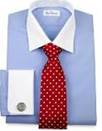
Sample Professional Image Guidelines for Men Shirts — The centerpiece of formal male attire The shirt sleeve cuff should be loose and extend to the end of your wrist. If your shirt has a button on the sleeve above the cuff, button it. Having shirts professionally laundered is a sound investment. Collars — Most formal to least formal Contrast collars Tab collars — should be worn with a tie. Straight collars — ideal for interviews Spread collars — ideal for interviews Button-down collars Ties — Add signature style The smaller the pattern and the darker the tie, the more authoritative the look. The point of your tie should lay over your belt buckle. Suits — dark neutrals are the most traditional and versatile When buttoning the jacket of a three button suit, fasten the top two buttons. A double breasted suit should always be buttoned when standing. Trousers — ground your look for business Fit is everything. Too big or too tight throws off the balance of your overall image. Pant hems should clear the shoe heel, but rest on the front of the shoe, creating a slight break. Socks — it is never a good idea to go sockless in a business setting Dark socks such as navy, black or brown are best. Over-the-calf socks are much better than shorter styles. Shoes — putting your best foot forward makes sense Best shoes for business are wing-tips, oxfords and dress loafers. Wear wing-tips with traditional suits — oxfords and dress loafers with more casual looks. For many men, shoes are an afterthought, but cheap or uncared for shoes can ruin an otherwise polished appearance. Wing-tips  Loafers Outerwear An all-weather (i.e.trench) coat and a well-maintained briefcase/tote are essential finishing pieces for most business outfits. Select a good quality trench coat with a zip-out liner so you can wear it year ‘round. You are often wearing a coat when you meet someone for the first time. Make sure this is one of the best items in your wardrobe.

Professional Image Guidelines for Men Read More »

Scroll to Top